
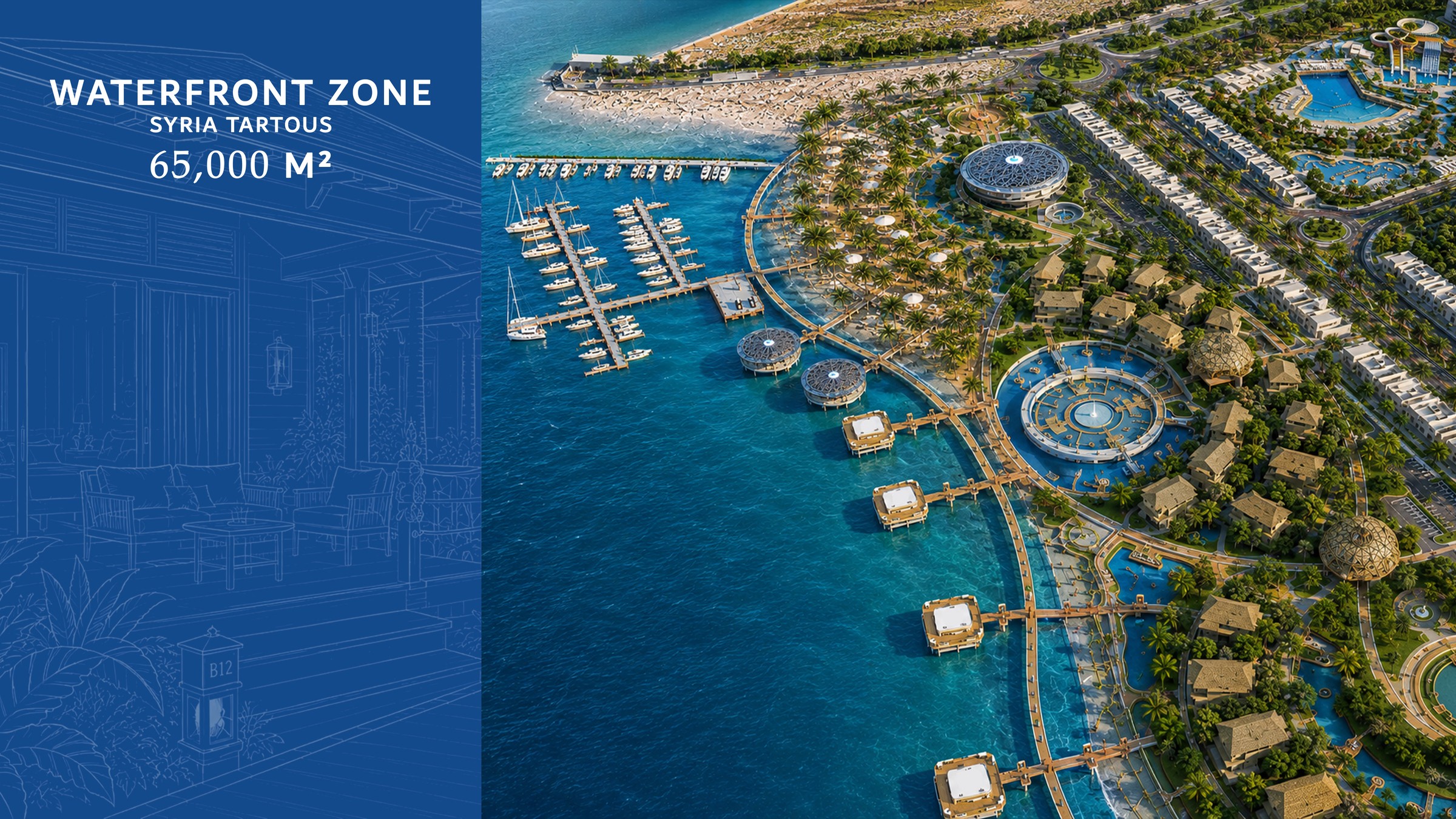
A waterfront is more than a premium edge to a site. It is a shared environmental, public and commercial asset. Successful planning needs to balance access to the water with hospitality operations, residential privacy, movement, landscape, servicing and resilient infrastructure.
Make the waterfront part of the public structure
The strongest destinations use the waterfront to organize movement and experience. Promenades, landscape, arrival points and active ground-floor uses should form a connected sequence rather than isolated attractions. This helps visitors understand the place and allows different development parcels to contribute to one identity.
Public access must be considered alongside security, service routes and private hotel or residential zones. The planning framework should define these boundaries clearly without making the waterfront feel fragmented.
Plan mobility and servicing early
Road hierarchy, parking, pedestrian movement, emergency access and back-of-house servicing all compete for space. If they are resolved late, they can weaken the public realm and reduce the efficiency of valuable development plots.
A coordinated transport and infrastructure strategy allows the master plan to protect pedestrian areas while maintaining practical access for hotels, retail, leisure venues and residential communities.
- Clear arrival and orientation
- Continuous pedestrian connections
- Separated service movement where possible
- Phased infrastructure that supports growth
Use landscape and climate as design inputs
Shade, wind, salt exposure, planting, water management and material durability influence the everyday success of coastal public space. These are not finishing choices; they affect the geometry, orientation and maintenance strategy of the development.
Views should be protected without producing an exposed or monotonous edge. A varied sequence of open spaces, sheltered areas and active uses can support different seasons and times of day.
Create a framework that can be delivered in phases
Destination-scale projects are rarely completed at once. The master plan should allow each phase to operate credibly, connect to essential infrastructure and contribute to the final identity. A clear phasing logic also helps the investor align capital, approvals and market timing.